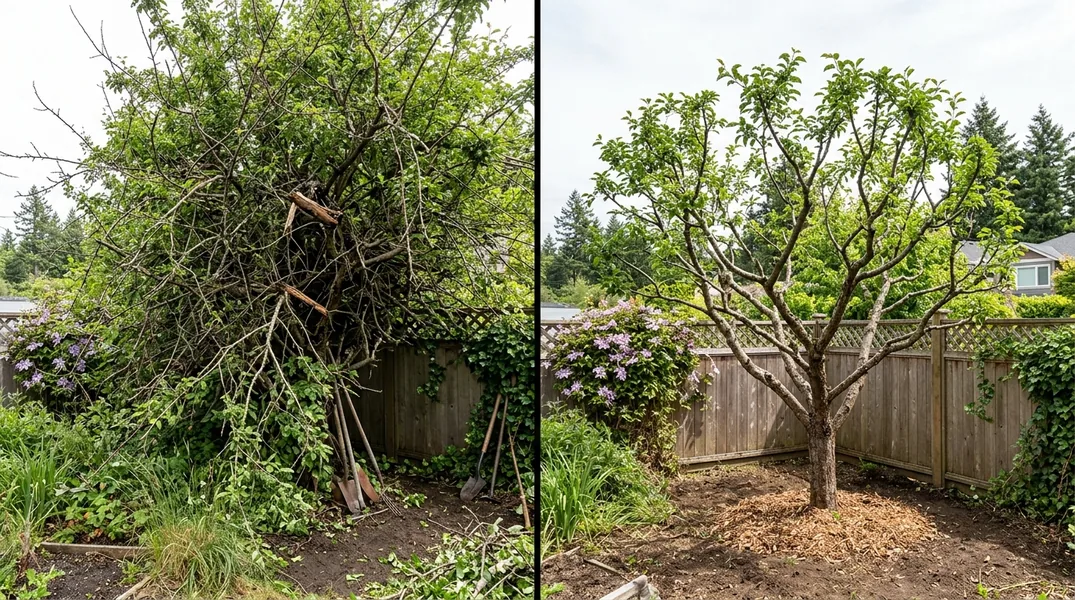
Why Winter Windstorms Put Victoria Trees at Risk
November through February brings some of the most severe weather to Victoria each year. Wind gusts regularly exceed 80 kilometres per hour, and when combined with rain-saturated soil, the conditions create a perfect storm for tree failure. Shallow-rooted species like Douglas-fir and western hemlock are particularly vulnerable, especially if they have been weakened by disease, poor structure or previous damage.
The risk is not merely aesthetic. A falling tree can cause serious injury, damage vehicles, destroy fences, or worse, crash through your roof. Property damage from windthrow can easily exceed tens of thousands of dollars, and in the worst cases, trees falling on houses in Victoria neighbourhoods have resulted in total loss claims. The good news is that most catastrophic failures can be prevented with timely assessment and corrective action taken before the storm season peaks.
Identifying Hazard Trees Before November Arrives
A hazard tree assessment is the foundation of any storm-preparedness plan. This professional evaluation identifies trees that pose a genuine risk to your home, driveway, fence or neighbours' property. During an assessment, a certified arborist examines the tree's structure, root health, lean, branch attachment, crown density and any signs of decay or disease. In Victoria, where wet winters and clay soils are the norm, root collar excavation and sonic tomography can reveal hidden decay that visual inspection alone might miss.
Trees that fail during windstorms typically exhibit warning signs long before they fall. Dead or dying branches in the upper crown, significant lean away from the direction of prevailing wind, cavities in the trunk, or mushroom fruiting bodies at the base all indicate structural compromise. Harbour City Tree Trimming offers professional hazard tree assessments that document these risks and provide clear recommendations, whether that means tree pruning to reduce wind load, cabling to support weak branches, or removal if the risk is too great.
Preventive Pruning: Your First Line of Defence
Preventive pruning before winter is far more cost-effective than emergency repairs after a storm. By removing dead wood, thinning the crown, and correcting structural defects now, you reduce the wind load on the tree and improve its ability to withstand gusts. Tree Trimming also improves air flow through the canopy, which is especially important in the damp climate of Victoria where fungal diseases thrive in dense foliage.
The key is proper technique. Heading back branches or topping a tree actually increases risk by promoting weak regrowth and creating large wounds that invite decay. Instead, certified arborists use the ANSI A300 standard for pruning, making cuts just outside the branch collar to allow the tree to compartmentalize the wound naturally. Removing codominant stems, crossing branches, and branches that attach at narrow angles strengthens the tree's framework and allows it to flex safely in high winds rather than snapping or uprooting.
Douglas-Fir Failure and Other Species-Specific Risks
Douglas-fir is one of the most common large trees in residential areas across Victoria, and it is also one of the most prone to windthrow failure during severe storms. This species has a relatively shallow root system and a heavy crown, making it vulnerable when soil is saturated. Many older Douglas-firs also carry decay from past damage or disease, weakening their structural integrity without obvious outward signs. Western hemlock and western redcedar present similar challenges, particularly when they are growing in ravine lots or on slopes where root anchorage is compromised.
Storm damage trees Victoria homeowners report often involve these species, and the damage pattern is usually predictable: the tree either snaps at the trunk or uproots entirely, taking soil and surrounding vegetation with it. A professional assessment can determine whether your Douglas-fir or other large conifers are at elevated risk. If they are, options range from targeted pruning and cabling to removal before the season peaks. Waiting until December or January, when storms are most severe, leaves you vulnerable and may make emergency services harder to access.
Storm Damage Trees Victoria: What to Do If the Worst Happens
Despite best efforts, some trees will still fail during a severe windstorm. If a tree is partially uprooted, leaning dangerously, or has dropped large branches over your roof or fence, do not attempt to remove it yourself. Unstable trees are extremely dangerous, and improper removal can cause additional damage or injury. Instead, contact Harbour City Tree Trimming immediately for 24/7 Emergency Tree Removal services. Our crews are trained and equipped to safely dismantle hazardous trees, clear debris, and restore your property.
After any storm event, document the damage with photographs for your insurance claim. Harbour City Tree Trimming can provide a detailed damage assessment that supports your claim and helps your insurer understand the scope of work needed. We also handle stump grinding and removal, wood chipping and debris hauling, so your property is returned to a safe, usable condition quickly.
Your Winter Tree Checklist: Act Now, Before November
The window for preventive work is closing. October and early November are the ideal months to complete hazard assessments and corrective pruning before the heaviest storms arrive. Here is what you should do now: schedule a free assessment with a certified arborist, have any dead or diseased branches removed, thin the crown of large conifers to reduce wind load, remove any branches that overhang your house or driveway, and inspect the base of large trees for signs of decay or root damage. If you see mushroom fruiting bodies, cavities, or significant lean, prioritize that tree for immediate evaluation.
Do not delay. Weather windows close quickly in late autumn, and if a tree is genuinely hazardous, waiting until December means you are gambling with your safety and your property. Call Harbour City Tree Trimming today at (778) 562-9545 to schedule your free estimate and storm-season assessment. Our certified arborists will walk your property, identify risk, and provide clear recommendations and pricing for the work needed. We serve all of Victoria and are ready to help you prepare before the season's worst weather arrives.
Looking for a professional in Victoria? Harbour City Tree Trimming responds quickly for all your tree trimming needs.
Get a free estimateOur services : Tree Removal · Tree Trimming · Tree Pruning